Native American History and Prehistory
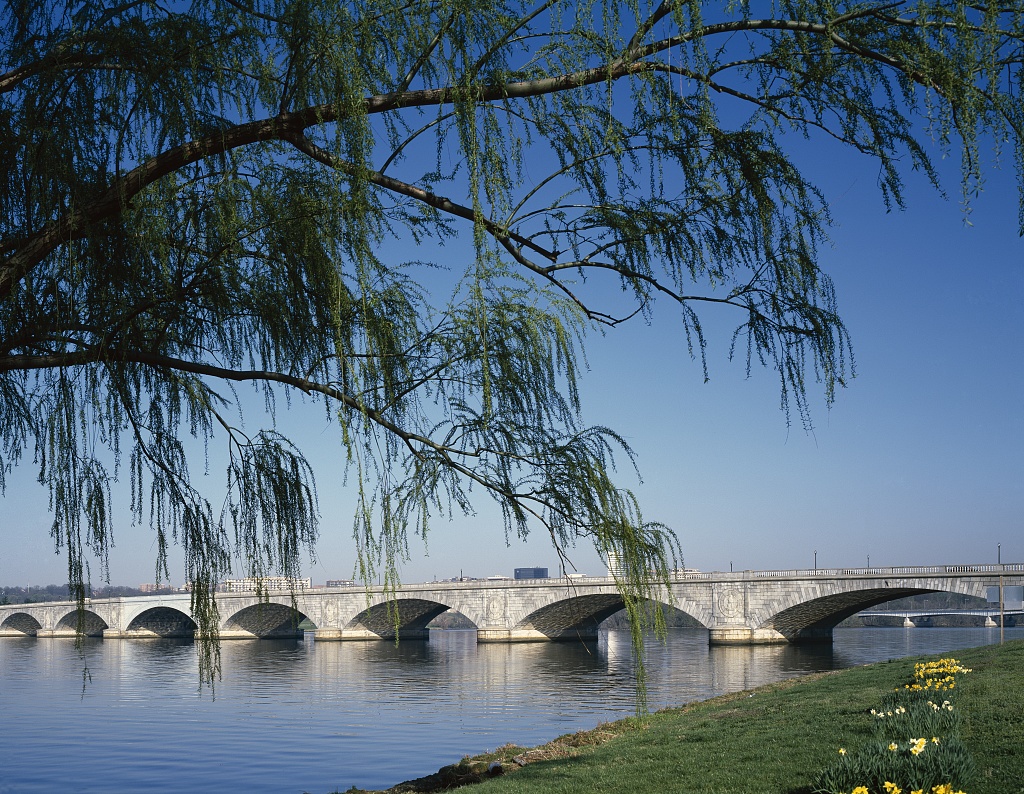 The Potomac River near Washington, D.C. For thousands of years, the Nacotchtank people lived along these waterways, fishing, trading, and farming the fertile lands. Photo by Carol M. Highsmith, Library of Congress.
The Nacotchtank People
The land that would become Upper Northwest Washington, D.C. was originally inhabited by the Nacotchtank (also called Anacostine), an Algonquian Indigenous people of the Northeastern Woodlands.
Who Were the Nacotchtank?
- The name "Nacotchtank" comes from the Algonquian word meaning "a town of traders"
- The village of Nacotchtank (from which the name "Anacostia" is derived) was the largest of three American Indian villages located in the Washington area
- They were believed to have been a major trading center in the region
- The tribe had approximately 300 members, compared to the larger Piscataway Chiefdom of about 7,000 members
Relationship with the Piscataway Chiefdom
The Nacotchtank fell under the loose confederacy of the Piscataway Chiefdom. This affiliation was primarily for protection against the rival Powhatan Chiefdom of eastern Virginia. Being part of this confederacy, the Nacotchtank spoke the Piscataway language, a dialect of Nanticoke belonging to the Algonquian subfamily.
Archaeological Resources in Northwest DC
The Upper Northwest region contains important prehistoric resources:
Quartzite Quarries
Quartzite was relatively easily chipped and available in quarries in the Piney Branch area of Northwest Washington. This stone was used to form sharp-edged tools, particularly: - Spears - Arrow points - Cutting implements
Soapstone Quarries
Soapstone was accessed primarily through the Rose Hill quarry in Northwest Washington. This material was used for producing: - Bowls - Pipes - Various vessels
Pottery Production
Evidence exists of Nacotchtank pottery production, with fragments discovered in excavations under the White House.
Settlements and Land Use
The Nacotchtank established settlements based on agricultural needs:
- They had a village north of what is now Garfield Park on Capitol Hill
- The tribe used flat land (now the site of the Supreme Court and Library of Congress) for agriculture
- They practiced the "Three Sisters" farming method, growing:
- Corn
- Beans
- Squash
- They deliberately chose flat terrain more suitable for agriculture than the uneven land bordering the rivers
European Contact and Displacement
Disease and Population Collapse
Europeans from Maryland introduced numerous Eurasian infectious diseases to which the Nacotchtank had no immunity: - Measles - Cholera - Smallpox
These diseases caused a catastrophic population loss among the tribe.
Relocation to Theodore Roosevelt Island
In 1668, the Nacotchtank tribe, depopulated from disease, collectively relocated to Anacostine Island (since renamed Theodore Roosevelt Island).
Final Migration
By 1697, the remaining Nacotchtank population on Theodore Roosevelt Island sought refuge in the larger Piscataway tribe of Southern Maryland. Due to increased tolerance for indigenous peoples in Pennsylvania, the Piscataway (including the absorbed Nacotchtank) migrated north around 1700, settling on land bordering the lower Susquehanna River.
Legacy Today
According to officials at the National Museum of the American Indian, there is no living Nacotchtank lineage remaining. Their numbers were decimated, and survivors were adopted into the Piscataway people, losing their original identity and descendancy.
Modern Recognition
- In Maryland, the Piscataway Indian Nation and the Piscataway Conoy Tribe received state recognition in January 2012
- Today, more than 4,000 Native Americans live in Washington, D.C.
- The name "Anacostia" remains as one of the lasting traces of the Nacotchtank presence
The Land Before the City
Before European settlement, the area that would become Tenleytown, AU Park, and surrounding neighborhoods was characterized by: - Dense forests - Stream valleys feeding into Rock Creek and the Potomac - High ridges offering commanding views - Rich wildlife including deer, turkey, and various game - Well-worn trails connecting villages and hunting grounds
This landscape would remain largely unchanged until the arrival of European settlers in the 17th and 18th centuries.