Tenleytown: The Heart of Upper Northwest
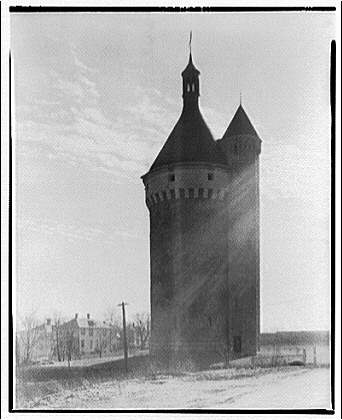 The Tenleytown Water Tower, photographed by Theodor Horydczak between 1920-1950. Library of Congress.
Tenleytown is one of the oldest communities in the District of Columbia, second only to Georgetown. Located at the intersection of Wisconsin Avenue and River Road, this neighborhood grew from a rural tavern stop into a thriving urban community over the course of more than two centuries.
Origins: John Tennally's Tavern
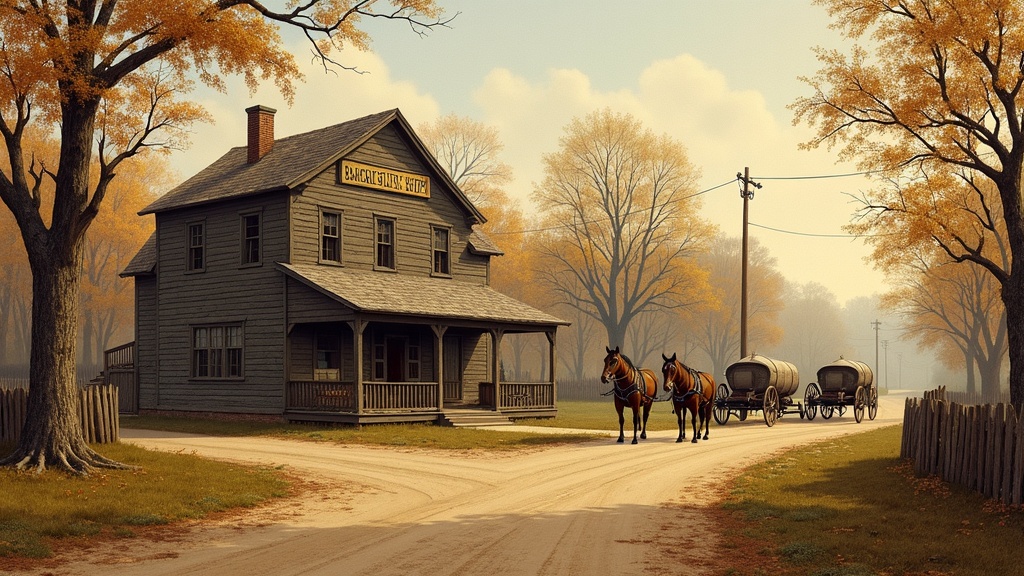 AI-generated artistic interpretation of John Tennally's tavern at the rural crossroads, circa 1790. Not a historical photograph.
The Founding of "Tennallytown"
The community began as a tiny Maryland village centered around John Tennally's tavern, years before George Washington chose the site of the Nation's Capital.
- A 1791 survey of River Road shows Tennally's Tavern at the intersection of River Road and the road known today as Wisconsin Avenue
- In 1790, locals began calling the neighborhood "Tennally's Town" after the tavern owner
- The village grew—very slowly—around this intersection
Who Was John Tennally?
Historical records document Tennally as a blacksmith-turned-innkeeper who operated the tavern as the primary hub for rest and refreshment in the area.
The spelling of his name varies wildly depending on the document consulted: - John Tennely - John Tennoly - John Tennally - John Tenally - John Tennerly - John Tennelly - John Tenerley - John Tenalley
The man himself could not have told you how to spell it, as he signed with an X.
The Tavern's Strategic Location
The settlement's core formed around the tavern in the late 1780s or early 1790s, positioned on the west side of the main road just beyond the River Road fork. This location was ideal for accommodating: - Wagon traffic from outlying farms - Travelers heading to the port of Georgetown - Stagecoaches running the Georgetown-Frederick (later Rockville) Road
Early Development (1800s)
A Small Rural Village
By the early 1800s, a hamlet called Tennallytown had emerged, named for its main business. The commercial area consisted of: - A few stores - A blacksmith shop - A church - Surrounding farms, orchards, dairies, and forest
Agricultural Economy
Wagons hauling agricultural products shared the dirt Georgetown-Frederick Road with bustling stagecoaches: - Tobacco - Wheat - Fruits - Vegetables
All were transported to the port of Georgetown for shipment.
Famous Visitors
Tenleytown's location on the main road to the northwest brought many notable travelers through the village: - George Washington - John Adams - Abraham Lincoln - Charles Dickens - Walt Whitman
The Name Evolution
Over time, the spelling evolved: - "Tennallytown" was used through the 1920s, including on streetcars - The modern "Tenleytown" eventually became the standard spelling - Some historical markers and documents still use the original spelling
Civil War Era
The Civil War transformed Tenleytown from a sleepy village into a military hub. The area became the site of: - Fort Reno (originally Fort Pennsylvania), the largest of the fortifications defending Washington - Training grounds for Union soldiers - Encampments that at one point included Walt Whitman and Oliver Wendell Holmes Jr.
[See the Fort Reno page for more details on the Civil War history]
Post-War Growth
The Streetcar Era (1890s-1960)
The installation of the electric trolley line in 1890 transformed Tenleytown: - The streetcar connected the village to downtown Washington - Residents could travel to the city for work, school, shopping, and pleasure without horse and cart - Many Tenleytown residents worked as motormen and conductors on the trolleys - The Tenleytown Car Barn was built around 1897
The streetcar line ran up Wisconsin Avenue from Georgetown:
"Downtown the power for the streetcar was underground, but when it got to Georgetown the motorman stopped and attached the trolley line to a wire overhead, and continued up Wisconsin Avenue."
Streetcars made their last runs on Wisconsin Avenue on January 3, 1960.
White Middle-Class Subdivisions
After the streetcar began connecting Tenleytown to downtown Washington, significant growth occurred. By the 1920s, white middle-class subdivisions appeared throughout the area.
Commercial Development
The Sears Era (1941)
Tenleytown was transformed on October 2, 1941, when Sears Roebuck opened its department store on Wisconsin Avenue at Albemarle Street.
Notable features: - 300-car rooftop parking lot (innovative for its time) - Art Deco/Streamline Moderne architectural style - Air conditioning - Poured-concrete construction
The store was designed by Sears' chief architect John Stokes Redden and store designer John Girard Raben.
The Sears building was added to the National Register of Historic Places on February 16, 1996.
Later Retail Evolution
- In the 1990s, Sears abandoned its retail operation
- Hechinger hardware moved in until the late 1990s
- Modern tenants include Best Buy, The Container Store, and Ace Hardware
- Whole Foods Market and CVS Pharmacy opened in the area
The Metro Era (1984-Present)
Tenleytown-AU Station
The Tenleytown Metro station opened on August 25, 1984, as part of the Red Line extension.
- Originally named simply "Tenleytown"
- Renamed "Tenleytown-AU" in May 1989 due to proximity to American University
- The $63,500 cost of changing signs was paid by the District government
- The station is more than 100 feet below the surface
- More than 92 million customer trips have been made through the station since opening
The Long Wait
When Metro announced in 1968 that a subway stop would be located in Tenleytown, rental prices went up. Streets near the stop were blocked off for about five years during construction.
Notable Sites Today
- St. Ann's Catholic Church (established 1866)
- Janney Elementary School (1925, National Register of Historic Places)
- Tenley-Friendship Library (rebuilt 2011, LEED Gold certified)
- Fort Reno Park (highest point in DC)
- WRC-TV Studios (NBC4 Washington)
Broadcasting History
Tenleytown has been home to significant broadcasting history: - WRC-TV studios hosted one of the Nixon-Kennedy presidential debates in 1960 - The "Joy Boys" radio show originated here - Jim Henson introduced Kermit the Frog to the world on Sam and Friends at WRC-TV (1955-1961)
Presidential Connections
Grant Road was a rural enclave in the heart of the neighborhood that was frequently visited by President Theodore Roosevelt on horseback.