Historical Timeline
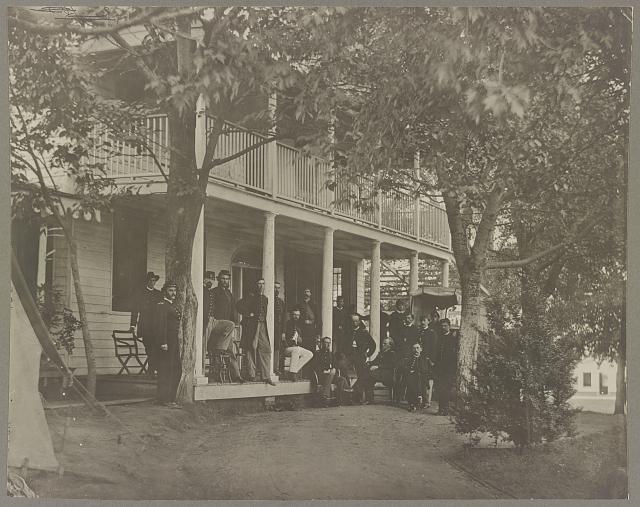 A Civil War-era fortification near Washington, D.C., similar to Fort Reno which protected the capital's northwestern approach. Library of Congress.
A comprehensive chronological overview of Upper Northwest Washington, D.C. history, from prehistoric times to the present day.
Prehistoric Era
| Date |
Event |
| ~10,000 BCE |
First human inhabitants arrive in the Potomac region |
| ~1000 BCE - 1600 CE |
Nacotchtank people establish villages and trading networks |
Pre-Colonial and Colonial Era
| Date |
Event |
| 1608 |
Captain John Smith explores the Potomac River region |
| 1634 |
Maryland colony established; European settlement begins in the region |
| 1668 |
Nacotchtank relocate to Anacostine Island (now Theodore Roosevelt Island) |
| 1697 |
Nacotchtank merge with Piscataway tribe, migrate north |
| ~1700 |
Area becomes farmland and forest following indigenous displacement |
The Founding Era (1790-1800)
| Date |
Event |
| ~1790 |
John Tennally establishes his tavern at the River Road intersection |
| 1790 |
Locals begin calling the area "Tennally's Town" |
| 1791 |
Survey of River Road shows Tennally's Tavern at the intersection |
| 1791 |
Washington, D.C. established as the nation's capital |
Early 19th Century
| Date |
Event |
| Early 1800s |
Village of Tennallytown emerges around the tavern |
| 1847 |
Georgetown College purchases farm on present-day Wisconsin Avenue |
| 1855 |
Methodist Cemetery established in Tenleytown |
| 1856 |
Giles Dyer dies; his estate will later become Fort Reno |
Civil War Era (1861-1865)
| Date |
Event |
| August 1861 |
Engineers identify Dyer estate as critical defensive site |
| Winter 1861 |
Fort Pennsylvania constructed |
| 1863 |
Fort renamed Fort Reno to honor Major General Jesse Lee Reno |
| July 11, 1864 |
Fort Reno lookouts spot Confederate advance near Rockville |
| July 11-12, 1864 |
Battle of Fort Stevens - only Civil War battle in DC |
Post-Civil War Era (1866-1890)
| Date |
Event |
| 1866 |
Fort Reno decommissioned; land returned to Dyer family |
| 1866 |
St. Ann's Catholic Church established |
| 1866-1870s |
Reno City emerges as African American community |
| 1867 |
First St. Ann's Church (wooden) opens |
| 1882 |
Tenley School built |
The Streetcar Era (1890-1920)
| Date |
Event |
| 1890 |
Electric streetcar service begins on Wisconsin Avenue |
| 1890 |
Tennallytown and Rockville Railway chartered |
| 1891 |
American University incorporated |
| February 1893 |
American University chartered by Act of Congress |
| 1896 |
Croissant & Stone plat American University Park (54 acres) |
| 1897 |
Tenleytown Car Barn built |
| 1897 |
First ten houses constructed in AU Park |
| 1903 |
Jesse Reno School built for African American students |
| 1903 |
Second St. Ann's Church (stone) completed |
World War I Era (1914-1920)
| Date |
Event |
| 1914 |
American University opens as graduate institution |
| 1917 |
U.S. Army takes over American University campus |
| 1917-1918 |
American University Experiment Station conducts chemical weapons research |
| 1919 |
Army begins closing the Experiment Station; buries chemical materials |
The Development Boom (1920-1941)
| Date |
Event |
| 1920s |
White middle-class subdivisions develop throughout the area |
| 1920s |
Reno City demolished; residents displaced |
| 1923 |
W.C. & A.N. Miller begins developing Wesley Heights |
| 1924 |
Burrows farmhouse relocated to 4624 Verplanck Street |
| 1925 |
American University admits first undergraduates |
| 1925 |
Janney Elementary School opens |
| 1925 |
50-acre Burrows estate sold and platted |
| 1929 |
W.C. & A.N. Miller begins developing Spring Valley |
| 1931 |
Alice Deal Junior High School opens |
| 1932 |
Janney Elementary west wing completed |
| September 1935 |
Woodrow Wilson High School opens |
Mid-20th Century (1941-1984)
| Date |
Event |
| October 2, 1941 |
Sears Roebuck opens department store on Wisconsin Avenue |
| 1943 |
Navy establishes codebreaking facility at Nebraska Avenue |
| 1948 |
Current St. Ann's Church dedicated |
| 1949 |
American University merges with Washington College of Law |
| 1955 |
Sam and Friends debuts on WRC-TV; Kermit the Frog introduced |
| 1956-1958 |
WRC-TV studios built at 4001 Nebraska Avenue |
| 1959 |
Ground broken for Tenley-Friendship Library |
| January 3, 1960 |
Last streetcar runs on Wisconsin Avenue |
| October 7, 1960 |
Second Nixon-Kennedy debate held at WRC-TV |
| October 27, 1960 |
Tenley-Friendship Library dedicated |
| 1961 |
Sam and Friends ends after six years |
| 1968 |
Metro announces Tenleytown station; Fort Reno concerts begin |
| 1975 |
Sears building modified for Metro station entrance |
The Metro Era (1984-Present)
| Date |
Event |
| August 25, 1984 |
Tenleytown Metro station opens |
| 1986 |
Immaculata Seminary closes; property sold to American University |
| May 1989 |
Station renamed Tenleytown-AU |
| 1993 |
WWI munitions discovered in Spring Valley |
| 1996 |
Sears building added to National Register of Historic Places |
| 1996 |
Search begins at 4835 Glenbrook Road for chemical weapons |
| Late 1990s |
Sears closes; Hechinger occupies the building |
| 2007 |
DC Association of Land Surveyors resurveys Fort Reno high point |
| 2009 |
Janney Elementary listed on DC Inventory of Historic Sites |
| January 24, 2011 |
New Tenley-Friendship Library opens |
| 2012 |
Army Corps demolishes 4835 Glenbrook Road for remediation |
| 2014 |
Immaculata Seminary added to National Register |
| 2020 |
Lord & Taylor and Neiman Marcus close in Friendship Heights |
| November 2021 |
Glenbrook Road chemical weapons cleanup completed |
| 2022 |
Wilson High School renamed Jackson-Reed High School |
| February 2024 |
Wisconsin Avenue Development Framework finalized |
| June 2024 |
19 WWI munitions found on American University campus |
Key Themes Across Time
Transportation Evolution
- Native American trails → Colonial roads → Streetcars → Automobiles → Metro
Population Shifts
- Indigenous peoples → Rural farmers → Post-war freedmen → Suburban whites → Diverse professionals
Institutional Development
- Tavern and church → Schools → University → Government facilities → Modern amenities
Land Use Changes
- Forest and farmland → Military fortification → Residential subdivisions → Mixed-use development